



Retirement uncertainty can be a challenge for people nearing retirement age, but for financial advisors, it also presents an opportunity to demonstrate the value of their advice.
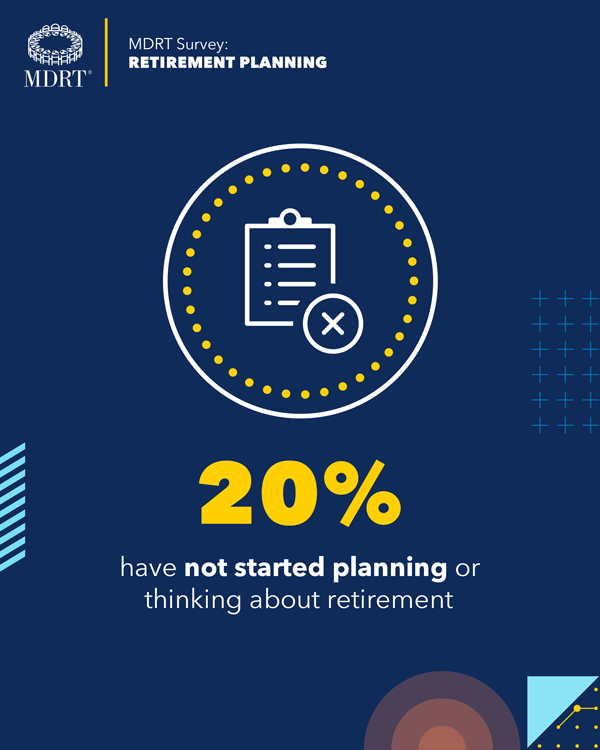
A 2026 MDRT survey of U.S. consumers found that just 20% have a defined retirement plan, and only 19% feel very prepared for retirement. Furthermore, people who do not work with financial advisors tend to have unrealistic expectations of when they will be able to retire.
More than 50% cited a rising cost of living as the biggest obstacle to feeling ready for retirement, according to the survey. Insufficient savings and healthcare expenses also were among the leading concerns.
While the findings are based on U.S. consumers, the larger message for advisors is broader: People may be saving for retirement without having a clear idea of whether they are on track. That uncertainty can create opportunities for advisors to begin conversations about goals, priorities and the purpose behind a client’s savings.
Providing clarity
Among people who expect to retire between ages 60 and 64, 57% have never worked with a financial advisor, according to the survey. This highlights more opportunities for financial advisors, as people may not understand how to get ready to retire. In fact, millennials and Generation X account for the largest shares who believe they will never retire, at 33% and 30%, respectively.
“We find that most people are saving well for their retirement, but because they don’t have a true plan in place, they don’t get that confidence they need to know when they can actually retire,” said nine-year MDRT member Brandon Heckert, CFP, AAMS. “Having an advisor provides the clarity that is needed,” said Heckert, who has five Top of the Table qualifications.
For advisors, helping clients build that plan can reinforce the value they provide. By identifying goals, recognizing savings gaps and creating a strategy that can adapt over time, advisors can help clients see the connection between what they are doing today and the retirement they hope to have.
Turning retirement anxiety into action
That doesn’t mean clients need to solve everything at once.
“Focusing on what can be controlled helps reduce the anxiety many clients experience,” said 17-year MDRT member Brian Joseph Haney, CFS, CLTC. “Helping people take small, but measurable, steps can make retirement planning feel less intimidating and more achievable,” said Haney, who has 10 Top of the Table qualifications.
Ultimately, retirement uncertainty gives advisors an opportunity to help clients replace questions with a plan, turn anxiety into action and build confidence in the path ahead.
For additional resources
- Read further about the survey
- Find more in MDRT’s Industry Research
- Explore other ideas in MDRT Learn
